
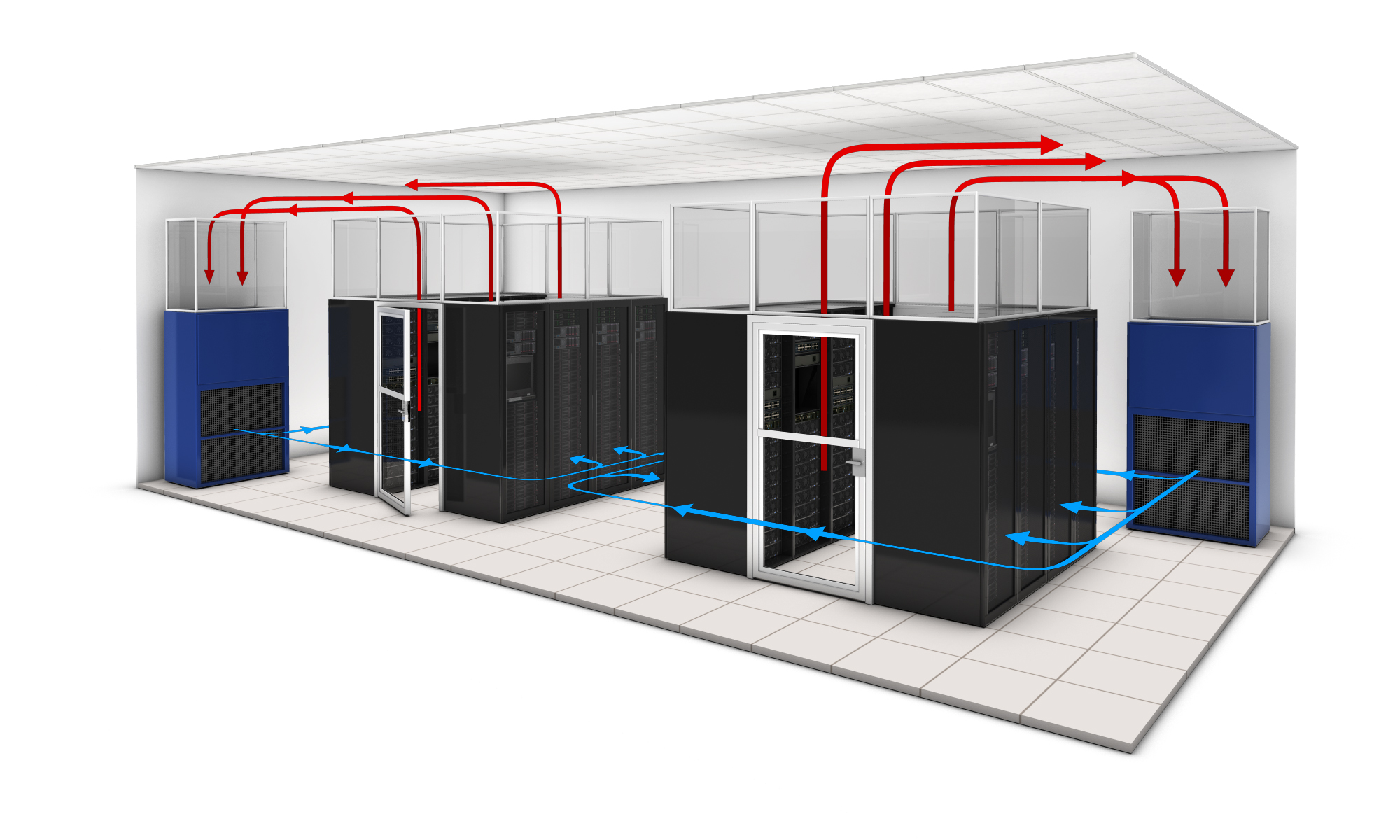
In an era where a single AI training rack can generate more than 100 kW of heat and edge sites demand instant scalability, the precision air conditioning unit has become the gold standard for protecting critical IT infrastructure, delivering ultra-precise temperature and humidity control while achieving unprecedented levels of energy efficiency and operational reliability.
What Defines a Precision Air Conditioning Unit
A precision air conditioning unit is a purpose-built cooling system engineered exclusively for technology-intensive environments that cannot tolerate even minor environmental fluctuations. These spaces include data centers, server rooms, telecommunications hubs, cleanrooms, and medical imaging suites. Unlike comfort cooling designed for human occupancy, precision units operate continuously at full capacity, maintaining temperature within plus or minus one degree Celsius and relative humidity within three to five percent year-round. They achieve this through advanced refrigeration circuits, variable-speed components, and intelligent controls that respond instantly to changing heat loads. The primary mission is removal of sensible heat—the dry heat produced by electronic equipment—while precisely managing the very small amount of latent heat present in sealed rooms. Modern precision units now incorporate artificial intelligence, predictive analytics, and full Internet of Things integration to anticipate cooling needs before they arise.
The Shift from Room-Level to Close-Coupled Cooling
Traditional computer room cooling relied on large perimeter units that pushed cold air through raised floors or overhead ducts, often traveling dozens of meters before reaching equipment. While effective for lower densities, this approach became inefficient as rack power climbed from 5 kW to 50 kW and beyond. The precision air conditioning unit of 2025 has largely moved to close-coupled architectures, particularly in-row and in-rack designs that place cooling capacity only centimeters from the heat source. This dramatically reduces fan power requirements, eliminates hot spots, and allows much higher supply air temperatures without risking equipment. The result is energy savings of thirty to fifty percent compared to legacy perimeter cooling, plus the ability to cool racks that would be impossible with traditional methods.
In-Row Precision Units: The Dominant Design
The in-row precision air conditioning unit represents the pinnacle of current cooling technology. Positioned directly between server cabinets, these units draw hot exhaust air horizontally from the hot aisle, cool it immediately, and discharge cold air into the cold aisle. With widths as narrow as three hundred millimeters, they occupy the same footprint as a standard rack while delivering twenty to ninety kilowatts of cooling capacity each. Horizontal airflow perfectly matches hot-aisle/cold-aisle containment, creating a sealed environment where virtually no mixing occurs. Advanced models feature digital scroll or inverter-driven compressors that modulate capacity from twenty to one hundred percent in seconds, electronically commutated fans that adjust speed continuously, and built-in humidifiers and dehumidifiers that maintain exact moisture levels without wasteful reheat cycles.
Technical Superiority in Every Aspect
Precision air conditioning units excel in every measurable category. Sensible heat ratio routinely exceeds zero point nine eight, meaning almost all cooling power targets equipment heat rather than unnecessary moisture removal. Airflow volumes reach fifteen thousand cubic meters per hour from a single rack-width unit, creating air change rates that eliminate localized overheating instantly. Response time to a sudden twenty-kilowatt load increase is typically under fifteen seconds. Redundancy is built in at every level: dual power feeds, multiple fan arrays, independent refrigerant circuits, and automatic failover between components. Many units continue operating at reduced capacity even with a compressor failure until maintenance arrives. Noise levels have dropped dramatically thanks to brushless DC motors and aerodynamic fan design, making them suitable for office-adjacent colocation spaces.
Configuration Flexibility for Any Environment
The modern precision air conditioning unit comes in multiple form factors to suit every possible installation scenario. In-row horizontal units dominate high-density deployments, while rear-door heat exchangers offer a zero-footprint alternative by replacing standard rack doors with active water or refrigerant-cooled panels. Overhead precision units serve facilities without raised floors, and traditional downflow computer room air conditioning units remain relevant for legacy environments. Pumped refrigerant systems eliminate water entirely from the data hall, using low-pressure loops that require no floor drains or leak detection. Hybrid configurations combine in-row air cooling with direct-to-chip liquid cooling for extreme AI workloads, where the precision unit maintains overall room conditions while liquid handles chip-level hotspots exceeding five hundred watts per processor.
Energy Efficiency and Green Operation
Despite running continuously, today’s precision air conditioning unit is remarkably efficient. Variable-speed everything—compressors, fans, and pumps—ensures power consumption tracks actual load precisely, eliminating the massive waste of fixed-speed cycling. Free-cooling economizers, both air-side and water-side, provide thousands of hours of compressor-free operation annually in moderate climates. Adiabatic systems pre-cool incoming air through controlled evaporation, reducing mechanical cooling needs by twenty to thirty percent in hot conditions. Ultra-low global warming potential refrigerants are now universal, and many units incorporate heat recovery wheels or coils that repurpose waste heat for building heating or hot water. When combined with proper containment, these features routinely deliver partial power usage effectiveness values below one point one five.
Intelligent Controls and Predictive Intelligence
The precision air conditioning unit of 2025 is as much a software platform as hardware. Touchscreen controllers provide intuitive local management, while cloud connectivity enables remote monitoring and control from anywhere. Machine learning algorithms establish normal operating baselines and detect the slightest deviation weeks before it becomes a problem. Vibration sensors, current monitoring, and refrigerant trend analysis predict component failures with remarkable accuracy. Some systems now coordinate directly with server power management, automatically reducing cooling capacity when workloads enter low-power states and ramping up instantly when new virtual machines deploy. Integration with data center infrastructure management platforms creates a unified view where cooling, power, and IT resources are optimized together in real time.
Installation Advantages and Scalability
One of the greatest strengths of modern precision air conditioning units is their scalability. Units can be added one at a time as new racks are deployed, eliminating the massive over-provisioning common with traditional designs. Quick-connect piping, plug-and-play power, and modular construction allow installation in hours rather than weeks. Top or bottom refrigerant connections accommodate any floor type. The pay-as-you-grow model aligns capital expenditure perfectly with business growth, while built-in redundancy ensures new units can be brought online without affecting existing equipment.
Maintenance Simplified for Maximum Uptime
Maintenance has been dramatically simplified. Filters slide out from the front without tools, coils are accessible for cleaning without moving the unit, and all major components are designed for hot-swap replacement. Comprehensive self-diagnostics log thousands of parameters, enabling precise troubleshooting and parts ordering. Many manufacturers offer augmented reality support where technicians see digital schematics overlaid on the actual unit through their devices. Predictive maintenance scheduling ensures service occurs only when truly needed, typically extending component life far beyond warranty periods.
The Road Ahead for Precision Cooling
Looking forward from late 2025, the precision air conditioning unit continues rapid evolution. Full integration with immersion and direct-liquid cooling creates seamless hybrid systems. Edge deployments demand ever-smaller units with integrated power and networking in self-contained pods. Artificial intelligence will move toward fully autonomous operation, making real-time decisions about supply temperature, containment configuration, and even workload placement based on cooling availability. For organizations researching different manufacturers or regional solutions, exploring precision air conditioning unit link alternatif often uncovers innovative approaches and competitive offerings worth serious consideration.
In conclusion, the precision air conditioning unit has evolved into an intelligent, adaptable platform that not only keeps today’s most demanding computing environments cool but actively enables the next generation of digital infrastructure. As heat loads continue their exponential growth, these advanced systems remain the essential foundation for reliable, efficient, and sustainable data center operation.









Leave a Reply